Story
Chopin in the salon — and the quiet kind of fame
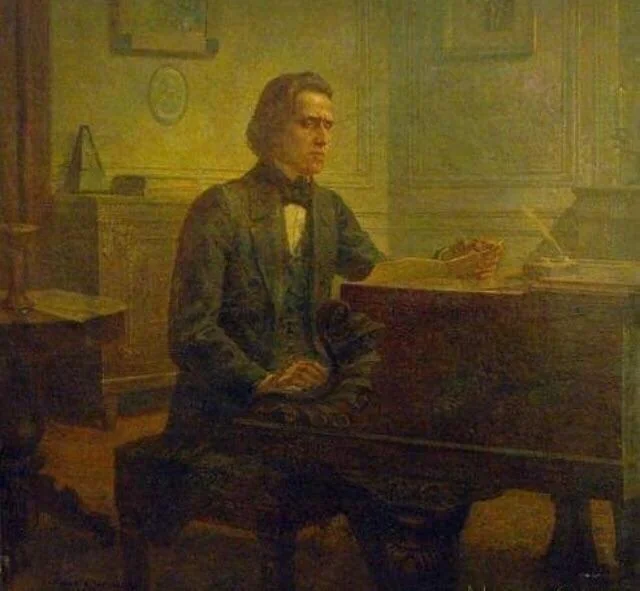
Frédéric Chopin did not conquer Europe by filling the largest halls with thunder. He preferred smaller rooms — Paris salons where candlelight, conversation, and a single piano could hold the night. Listeners leaned in. That was the point. His playing was famous for a singing tone and a rubato that felt like speech: never metronomic, never careless, always alive.
Born near Warsaw in 1810, Chopin arrived in Paris as a young virtuoso from a Poland under political strain. Exile sharpened his nostalgia; the mazurkas and polonaises he wrote were not souvenirs so much as living identity — dance rhythms carried into exile and made intimate. Meanwhile his études, nocturnes, and ballades rewrote what “piano music” could ask of a hand and a heart.
He was also fragile. Chronic illness shadowed his adult life, and public concertizing exhausted him. Teaching and composing became the steadier path. Students and friends remembered a meticulous ear: a wrong pedaling, a hard tone, a phrase that failed to breathe — he noticed. The myth of the swooning Romantic sometimes hides the craftsman who obsessively refined detail until the music felt inevitable.
One story that still travels well is less a single scandal than a pattern: Chopin declining the spectacle that made other virtuosi rich, choosing instead rooms where soft playing could still devastate. Fame, for him, was not volume. It was the hush after a cadence — the moment a room realizes it has been holding its breath.
He died in Paris in 1849, not yet forty. The music did not stay in the nineteenth century. Every generation rediscovers how personal a piano can sound when it refuses to shout. Chopin’s lesson for practicing musicians is quietly radical: you do not always need a bigger stage. Sometimes you need a truer touch.