History
A short history of the piano
Around 1700 in Florence, Bartolomeo Cristofori — keeper of the Medici’s instruments — built something the musical world did not yet have a casual name for. He called it a gravicembalo col piano e forte: a harpsichord-like body with a new soul. Where plucked strings always spoke at roughly the same volume, Cristofori’s hammers answered the finger. Press gently, hear soft. Press with intention, hear loud. Dynamics became a language written directly into the touch.
Early fortepianos were delicate by modern standards: lighter frames, thinner strings, shallower key dip, and a sound that sat somewhere between intimacy and declaration. Builders across Europe experimented — Silbermann in Germany, later Broadwood in England, Érard and Pleyel in France — each chasing a different ideal of clarity, power, or singing tone. Composers wrote to the instruments in front of them. What we now call “piano music” was, for decades, an argument between makers and musicians about how much force wood and wire could honestly hold.
Mozart thrived on the early piano’s sparkle and conversational clarity. His concertos treat the instrument as a witty partner to the orchestra, not a steam engine. Beethoven pushed harder. As his hearing darkened and his imagination widened, he demanded more sustain, more thunder, more range. Letters and contemporary accounts show him breaking instruments and begging makers for strength. The piano’s evolution in the early nineteenth century is partly the story of one composer refusing to accept the limits of yesterday’s frame.
The Romantic century finished the transformation. Iron frames, higher string tension, felt hammers, pedals that could bloom a chord into a room — the instrument grew into the concert grand we recognize. Chopin found poetry in the singing middle voice and the soft pedal’s veil. Liszt turned the keyboard into theater. Brahms and later Rachmaninoff filled the instrument’s bass with gravity. Public concerts, middle-class parlors, and sheet-music publishing spread piano culture farther than any single court workshop ever could.
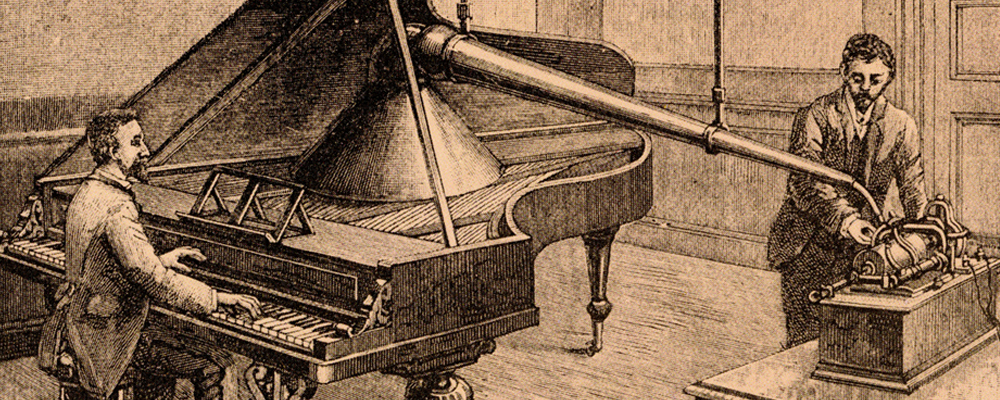
By the late 1800s the modern silhouette had largely arrived: around eighty-eight keys, a cast-iron plate, and an action refined enough for both velvet and violence. What changed afterward was less the outline than the world around it. Recordings froze interpretations. Competitions standardized repertoire and nerves. Radios and living-room uprights made the piano a household ambition. Jazz players reinvented touch again — stride, bebop, electric keys — proving the instrument could host more than one tradition.
The twentieth century also democratized access in uneven ways: school programs, method books, digital keyboards, and eventually MIDI, which let a keyboard speak to computers as cleanly as it spoke to concert halls. An 88-key controller and a laptop can sketch ideas Cristofori could not have imagined, while a handmade concert grand still asks for the same ancient negotiation between weight, timing, and tone.
Today the piano’s story continues in practice rooms, livestreams, and browsers that listen over USB. The technology around it keeps changing. The core promise has not: a fingertip becomes a sound that can fill a room — soft or strong — because someone in Florence refused to accept a keyboard that could only speak at one volume.
That is the short history, told long enough to feel the arc: invention, argument, expansion, and a culture that still gathers around eighty-eight keys hoping the next note will mean something.